
Elevate your skills with the NICABM – Working with the Pain of Abandonment course, available for just Original price was: $97.00.$35.00Current price is: $35.00. on GiOWiki.com! Browse our curated selection of over 60,000 downloadable digital courses across diverse Everything Else. Benefit from expert-led, self-paced instruction and save over 80%. Start learning smarter today!
Purchase NICABM – Working with the Pain of Abandonment courses at here with PRICE $97 $35
NICABM – Working with the Pain of Abandonment

Working with the Pain of Abandonment

How to Work with Clients Who Are Hypersensitive to Rejection
Peter Levine, PhD Ron Siegel, PsyD
Judson Brewer, MD, PhD Melanie Greenberg, PhD
- The specific neural pattern that fuels a fear of abandonment
- One way to help clients shift out of a rejection-oriented mindset
- How to work with a client’s panic when being rejected

Key Strategies for Working with Abandonment and Trauma
Bessel van der Kolk, MD Peter Levine, PhD
Kelly McGonigal, PhD Resmaa Menakem, MSW, LICSW, SEP
Melanie Greenberg, PhD
- How PTSD can lead to powerful brain schemas that invite rejection from others
- One practice to help clients with panic disorder regulate their body when triggered by abandonment
- How trauma-informed neurofeedback can neutralize reactivity to an experience of rejection

How to Approach Shame That Drives a Fear of Rejection
Dan Siegel, MD
- How the ruminating brain can lock clients into ambivalent relationships that invite shame
- How to work with clients whose sense of defectiveness fuels a fear of abandonment

How to Recondition a Nervous System Damaged by Abandonment
Stephen Porges, PhD Deb Dana, LCSW
- How abandonment leaves a deep tracing on the nervous system (and what this means for treatment)
- Why the nervous system will often sabotage offers to co-regulate
- How to help a client’s nervous system tolerate ruptures in a relationship

How to Read the Abandonment Story Your Client’s Body Is Telling
Pat Ogden, PhD Bonnie Goldstein, PhD Deb Dana, LCSW
- How to recognize possible signs of early life abandonment in your client’s body
- How a client’s physiology can reveal the way they’re managing a fear of abandonment

Ways to Change Fearful Behavior That Sets a Client Up for Further Abandonment
Pat Ogden, PhD Melanie Greenberg, PhD Ron Siegel, PsyD
Donald Meichenbaum, PhD Terry Real, MSW, LICSW
- Two specific ways a client’s fear of abandonment can become a self-fulfilling prophecy
- How to reframe a client’s neediness to make it an ally in their healing
- How to help a client stay regulated when their partner rejects their needs

How to Help Clients Stop Sacrificing Their Boundaries to Avoid Being Abandoned
Joan Borysenko, PhD Kelly McGonigal, PhD Ron Siegel, PsyD
Judson Brewer, MD, PhD Melanie Greenberg, PhD Pat Ogden, PhD
- The addiction model that leads a client to soften their boundaries (and how to change it)
- The painful reason why some clients will gamble away their principles in a relationship
- Two practical ways to help clients shore up their personal boundaries

A 3-Step Strategy to Expand a Client’s Tolerance of Rejection
Steven Hayes, PhD Kelly McGonigal, PhD
- How to help clients engage their fear of abandonment without getting overwhelmed
- How to adjust your treatment of abandonment when the client dissociates
- A compassionate strategy to help clients break a paralyzing fear of abandonment

How to Treat A Fear of Abandonment Linked to Betrayal
Shelly Harrell, PhD Richard Schwartz, PhD Stan Tatkin, PsyD, MFT
- One way to reduce the stigma and humiliation a client attaches to their experience of betrayal
- The damaging way clients often approach decisions when they fear loss
For This Short Course on How to Work with a Client’s Pain of Abandonment, We Brought Together Some of the Top Experts in the Field
Here’s What You’ll Get:
Everything is yours to keep forever in your professional library
 |
Downloadable videos so you can watch at your convenience, on any device |
|
Audio recordings you can download and listen to at home, in the car, at the gym or wherever you like |
|
Professionally-formatted transcripts of the sessions, to make review and action simple |
|
Three downloadable bonus videos to help you work with a Client’s Pain of Abandonment |
Get 3 Bonuses That Give You Even More Strategies for Working with a Client’s Pain of Abandonment

Bonus 1
How to Work with Children Who Have Separation Anxiety
Pat Ogden, PhD Stephen Porges, PhD
Lynn Lyons, LICSW Bill O’Hanlon, LMFT
- The parenting paradox that can often lead to insecure children
- How to adjust external reassurances during a separation to fit the child
- Two factors that have the greatest impact on a child’s ability to separate from their parents
- How to reframe a child’s fear so they can problem solve and become more flexible in life

Bonus 2
How to Establish Strong Therapist-Patient Boundaries with Clients Who Have Been Abandoned
Deany Laliotis, LICSW Pat Ogden, PhD Judson Brewer, MD, PhD
Deb Dana, LCSW Onno van der Hart, PhD
- 5 strategies to help clients heal from abandonment without sacrificing therapeutic boundaries
- How to structure between-session contact that nourishes the client’s nervous system while honoring clinical boundaries
- How the practitioner-patient therapy model could be amplifying a client’s fear of abandonment (and how to adjust it)
- How to foster healthy co-regulation with clients without compromising your boundaries
Bonus 3
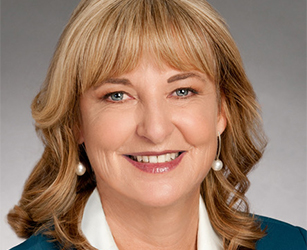
How to Repair Early Life Abandonment Through EMDR
Laurel Parnell, PhD
- A two-prong approach with EMDR to help clients heal from both trauma and a negative attachment history
- A powerful visualization exercise that can help clients repair painful areas of abandonment in their development
Starting Today, This Program Can Change the Way You Practice
. . . I feel so fortunate to have this access to brain power, experience and research synthesis . . .
“When I listen to the experts talk openly about their experience, I feel so fortunate to have this access to brain power, experience and research synthesis on cutting edge issues! I go back to the videos to reinforce things that will assist my clients.”
Mary Logan, Counselor
Ipswich, MA
I benefit, my practice benefits, and most important my clients benefit . . .
“I live in Nova Scotia and have limited travel funds at the university at which I work. The series provided by NICABM gives me the rare opportunity to listen to the leaders in the field. As a result, I learn valuable information that would not otherwise be available to me. I benefit, my practice benefits, and most important my clients benefit from the knowledge and wisdom I gain from the series.”
David Mensink, PhD Counseling Psychology, Psychologist
Halifax, Nova Scotia, Canada
. . . some dare to go the extra journey to research and educate
“These NICABM series keep me afloat, in touch, on track, well trained in my field, and more personally healthy. The best aspect, though, is that I feel validated and comforted knowing that some dare to go the extra journey to research and educate, so I can walk the path to health, and can share with others.”
Mary Corsello-Vilcheck, LCSW
Midlothian, VA
Course Director
Ruth Buczynski, PhD
Dr. Ruth Buczynski is a licensed psychologist and founder and president of The National Institute for the Clinical Application of Behavioral Medicine (NICABM). NICABM helps physicians, nurses, psychologists, social workers, and counselors – practitioners who have some of the most significant and life-changing missions on the planet – provide cutting-edge, research-based treatment strategies to their patients. For more than 25 years, NICABM has offered accredited training and professional development programs to thousands of practitioners worldwide.
Why the Transcript Is Essential:
Click the image to enlarge
Image opens in lightbox
The transcript makes it easy to go back and double check concepts, citations and names that are mentioned
We put in a table of contents to make it easy for you to find the exact part of the webinar you need
Having the concepts already written allows you to take notes on how you’re going to use the ideas rather than transcribing the ideas
Some people simply learn better by reading than by listening or watching
You will be able to print out and share techniques presented in the session with your patients
Angela Lawrence
“I really liked being able to follow along with the transcripts as I listened…it was nice not to feel like I had to take notes. I really feel like I remember more when I both hear and see at the same time.”
Mary Ellen McNaughton, Masters in Counseling, Psychology Counselor
Kelowna, British Colombia, Canada
Get NICABM – Working with the Pain of Abandonment download
Purchase NICABM – Working with the Pain of Abandonment courses at here with PRICE $97 $35
Cultivate continuous growth with the NICABM – Working with the Pain of Abandonment course at GiOWiki.com! Unlock lifetime access to premium digital content, meticulously designed for both career advancement and personal enrichment.
- Lifetime Access: Enjoy limitless access to your purchased courses.
- Exceptional Value: Benefit from savings up to 80% on high-quality courses.
- Secure Transactions: Your payments are always safe and protected.
- Practical Application: Gain real-world skills applicable to your goals.
- Instant Accessibility: Begin your learning journey immediately after buying.
- Device Compatible: Access your courses seamlessly on any device.
Transform your potential with GiOWiki.com!